NepalUpdated Feb 3, 2023
Everest Base Camp Difficulty Guide
Everest Base Camp requires consecutive walking days at altitude rather than technical climbing. Assess your fitness, acclimatization schedule, and recovery time.
Private Nepal, Tibet & Bhutan journeys

This is an extreme adventure expedition with high and icy pass to Amphu Laptsa.
Duration
Max elevation
From group price
 PDF
PDFYour trip planning kit
Trip overview
Journey overview
A quick read on the route, the comfort level, the pricing rhythm, and the details most travelers want before they get in touch.
In short
Quick route highlights
Short, practical, and easy to scan before you dive into the longer trip description.
Highlight
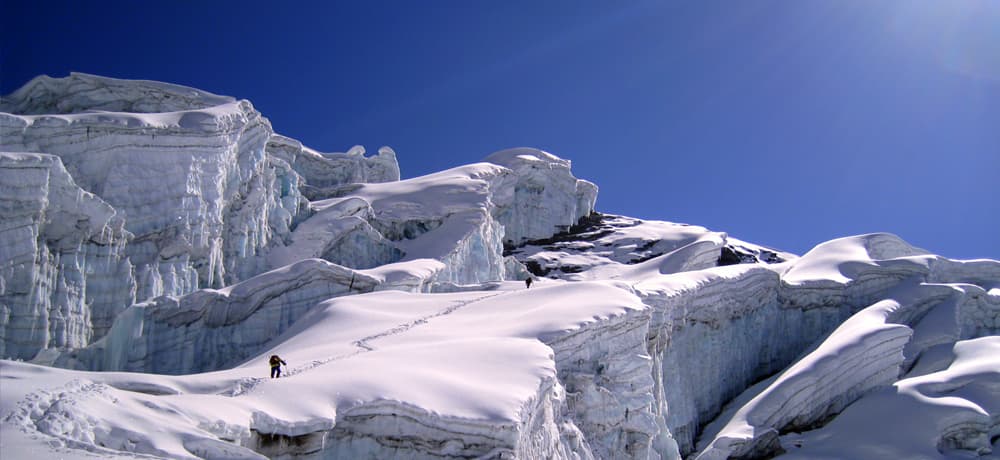
Island Peak Climbing in the Everest region of Nepal is one of the most sought-after treks of thrill seekers residing
Island peak (named by Eric Shipton’s mountaineering team in 1953) or Imja Tse is located on top of the Chhukung
Peak expedition is one of the leading activities preferred by the trekkers in Nepal. So far, 33 peaks have officially
Starting from Lukla the trail makes its way through different colorful settlements of Sherpa people, prayer rocks, monasteries, suspension bridges
Island Peak Climbing in the Everest region of Nepal is one of the most sought-after treks of thrill seekers residing in different corners of the world. This trek takes climbers to the altitude of 6,189m above the sea level, offering them the best peak climbing experience.
Island peak (named by Eric Shipton’s mountaineering team in 1953) or Imja Tse is located on top of the Chhukung glacier amid Ama Dablam and Mt Lhotse. The peak flaunts itself as an island in the sea of ice. Thus, this peak lying in the middle of Chhukung valley is known as an Island peak.
Why travelers plan with Amigo
Open each day to see the route notes, overnight rhythm, altitude cues, and the small details that help you understand how the journey actually flows.
Detailed notes for this day will be confirmed with your final route plan.
Detailed notes for this day will be confirmed with your final route plan.
Detailed notes for this day will be confirmed with your final route plan.
Detailed notes for this day will be confirmed with your final route plan.
Detailed notes for this day will be confirmed with your final route plan.
Detailed notes for this day will be confirmed with your final route plan.
Detailed notes for this day will be confirmed with your final route plan.
Day details
At the airport you will be met by our representative and transferred to the Hotel. Your kitbag containing sleeping bag, down jacket will be issued upon arrival and individual equipment/gear checks will be held during the afternoon. A pre-trek briefing will be held at evening and is a great opportunity to get acquainted with your fellow group members before heading out to dinner.
Day details
This morning final gear checks will be held and afterwards we will depart for sightseeing tour. You will take to the key attractions in Kathmandu at the pilgrimage sites of Hindus temple Pashupatinath, the world biggest Bouddhanath Stupa and visit Swyambhunath Stupa also known as monkey temple. After exploring the surrounding areas visit historical Kathmandu Durbar Square with temple, unique architectures and Kumari (living goddess). Evening pre-trip discussion and introduce with our fellow trekking staff for your adventure trip.
Day details
We will be taken to the airport for one of the great flights of the Himalaya. If the sky is clear during our flight, we will get our first views of Everest and the region in which we will be climbing. The Twin Otter aircraft will take us to the hillside village of Lukla, which is the start of our trek to Mera. Here we will meet our camp staff and porters and set off straight away for our first camp at Puiyan.
Day details
After breakfast cross the Poyan Khola, then we turn off the main trade route coming up from the south and join an older route, which climbs steeply to the ridge-line overlooking the Khare Khola. Descending the other side of the ridge, we then contour along the hillside before climbing steadily up to the attractive farming and trading village of Pangkongma. Many expedition members have been made welcome by the villagers here, spending several pleasant hours warming themselves in front of an open fire in the enveloping and welcoming atmosphere of the local's traditional Sherpa homes.
Day details
Today we climb the half hour or so to the Pangum La (3175m/10410ft) and our gateway toward the Hinku Valley, and now start to head eastward and then in a northerly direction. Today is a solid descent to the Hinku River of at least 900 meters depending on which path we take, and then a climb up to our camp high on the other side near the Surke La. We are once again traveling through a mix of terraced slopes containing grain crops interspersed by undisturbed forests of the upper temperate zone; maples, rhododendrons and fir.
Day details
After breakfast we climb up to the Source La (3085m/10118ft) we now follow the spine of the Surkie Danda ridge northwards towards Mera and the Hinku and camp part way along at a yak herders clearing or kharka. These next few days are far from teahouse and trekkers trails and should be some of the finest Himalayan wilderness trekking of the trip.
Day details
Continuing along the ridge, we climb higher and higher over knolls (lumps in the ridge) of 4000 meters and then 4500 meters. The terrain has now elevated well above the tree line and is grassy slopes and rocky outcrops and cliffs, where birds of prey may be seen flying overhead such as Griffon vulture, lammergeyer or eagles. We then descend to a camp set near a series of five lakes, Panch Pokhari, set beside the river of the Chunbu Kharka.
Day details
Today is a rest day and a lovely natural setting to explore further.
Day details
Our route now contours around many ridges on the eastern side of the Hinku, descending lower into forests of rhododendron. Near the valley floor we encounter the devastation caused by a natural damn at the head of the valley bursting in 1998. The valley has been destroyed, leaving boulders, dead trees and silt where once there were old growth forests and meadows. Our campsite is on a pleasant grassy patch, on the now much higher bank of the rocky riverbed.
Day details
Today we are now in the Hinku Valley proper, and cross over by way of a yak herder's bridge and join the main trail. The first settlement we stay at the busy village of Kote, primarily servicing the trekking groups that come through for Mera. As a result of the tremendous washout of boulders and debris, the trail follows the riverbed mostly, a good trail among rounded stones and silt. We gain our first views of dramatic peaks of the valley; Kusum Kanguru to our left that stands directly before us. The path then weaves up on to the pastures on the left hand side and pleasant easy trails through to Tagnag. Today we also enjoy our first views of Mera, initially at the confluence of the Sanu Drangka above Kote, if the weather is clear we see the dramatic south face, and then on our final approach into Tagnag. We are now among mountains and starting to prepare for our climb.
Day details
Today we can experience an excellent valley opening out views to the north of the Hinku Nup glacier and the line of peaks beyond. Behind us is the dramatic spire of the less than romantically named 'Peak 35', which has yet to be climbed. Only the last section up to our base camp at Khare is steep and reminds us that we are gaining altitude. It's a short climb and we are there in good time for lunch.
Day details
A steady climb out of the valley and up through lateral moraine and grassy culverts to our last camp below the snowline. The route itself is fairly straightforward, there are objective hazards and good basic technique and awareness of changing conditions is vital for every individual.
Day details
These three days going to plan and the weather on our side, we would move up to a rock and glaciated camp just off the Mera La saddle at approx 5400m/17712ft. Plastic mountaineering boots are usually worn from base through to the summit bid and return. Whilst they feel clumsy they are perfect for the job, providing warmth, protection and stability for the variable terrain including loose rocks, snow and ice. Another camp is set half way up the long North Slope of the mountain, at about 5700m/18696ft near a rock knob. Although it is a shorter distance here, it can be difficult in poor conditions and you are at altitude and are harder and further than it first appears. The summit bid will be made early in the morning (anywhere from 2am to 5am) from this high camp, and take around 4 to 6 hours to make the summit. Whilst the distance doesn't look far, we can assure you it will be hard work, and all the preparations and a positive, tempered attitude will pay off here. It is usually necessary to rope up for much of the summit approach due to crevasse hazards along the route. The route can vary depending on the conditions of the season but usually skirts around a major shoulder in front of us to the back side of the mountain and then traverse in a fairly straightforward approach to the summit knob. As the light comes, we enjoy incredible views across to Baruntse (7129m), Chamlang (7319m) and Nau Lekh (6360m) with Makalu (8481m) looming behind. Further to our left is Everest, peaking over several unnamed peaks of the Hinku. To the south we can see for miles down to the terrain. We aim to make the summit early/mid-morning and return to base camp after summit. The exact schedule will depend on many factors, including the weather, condition of the route and condition of the members. Our contingency of equipment and experienced staff and a time buffer, gives us a fair amount of flexibility to achieve success for all who have worked hard and consistently from the beginning of the expedition. The day will be long, and this is where all the training beforehand, the trek approach, and the right attitude will combine to give you stamina and confidence to be part of a sound team, with optimum chances for the summit.
Day details
We will need to make a relatively early start today. Once our porters are organized we will commence our most remote stages of the expedition. We descend into the Honku valley near to five large glacial lakes which sprawl out before us. They are known as Panch Pokhari (five lakes). The Amphu Laptsa pass is situated immediately at the head of the valley to our right and is basically the low point on the ridge between the Hunku and the Imja valleys. For this day or so we are in the Hunku. A new vista of peaks span out before us including Ama Dablam to the distant westward, and many unnamed peaks. Camp is set close to the rocks that lead up to the pass. On these stages we ask that members be flexible and co-operative. Camps will be set where conditions allow, and your leader will keep you advised as to each days plan.
Day details
Final preparations and gear checks for our pass crossing Amphu Laptsa.
Day details
After early breakfast an alpine start for our pass crossing. Once again, ferrying across all our loads together with all party members, crew, porters and members takes time. The approach to the pass from the Hunku is deceptive. Facing east and southward there is much more sun and little snow, just a collection of rocks that gradually lead up to the gap we travel through. On the north facing side we find steep slopes of snow that we must take care to descend by fixed ropes to the snow basins below and subsequent moraine and alpine valley beyond. The views from this pass crossing to the peaks of Khumbu are unmatched. Any spare moment one may have whilst we are climbing and descending will allow one to appreciate the spectacle of the peaks of the region.
Day details
An alpine start sees us climbing steeply up the lower flanks of the south-east face. The track is well used as this is a popular peak. At times there is a bit of rock scrambling and the rocky spur takes us to a snow ramp that leads to the upper snow fields. The peaks of Makalu and Lhotse come into view as we climb higher. Upon crossing the upper nave, it is necessary to fix ropes up a short but steep ice face that leads on to the summit ridge. The summit ridge is a classic alpine ridge and quite exposed, (we fix ropes here also) and traverse our way to the summit. Although Island Peak appears dwarfed by the seven and eight thousanders surrounding it, it provides a magnificent vantage point to all the peaks south of the stupendous Lhotse face. After some exhilarating moments on the summit we descend by the same route to our base.
Day details
We begin our exit trek descending through the famous Khumbu Valley to Tangboche Monastery and Namche Bazaar. Namche is known as the Sherpa capital and it is a great place to wonder around, visit the Tibetan stalls or enjoy the Swiss bakeries. We descend the slopes of Namche to the Dudh Kosi joining the main trail to follow at riverside through numerous villages to Phakding. On crossing the bridge, we trek a short distance up and around, to the broad flat spur that Lukla lies upon. The last night is always memorable for an end of trip celebration with all the crew and porters.
Day details
After an early morning flight to Kathmandu our guide transfer you to your hotel. You may have time to relax after long journey and take back your breath and rest at your hotel with ending your Himalayan trip with us. The remainder of the day is at leisure to rest, relax or explore and shop in the town.
Day details
Today is free or last minute shopping for souvenirs or gift to your family, friends or relatives for you until your departure flight/drive or to commence any extra trips or activities you may have booked with us. If departing, you'll be transferred to the International Airport for your departure flight to your onwards destination.
Group pricing tiers
Per-person rates adjust automatically with your party size. Member discounts apply where available.
2-10 travelers
US$ 4,490
per personTraveler suitability
This guided trek in Nepal is planned across 27 Days around route flow, support logistics, traveler comfort, and realistic operating conditions. The pace protects acclimatization, daily effort, and weather flexibility.
We review Nepal routes around altitude or road rhythm, daily effort, guide support, permit timing, accommodation flow, and traveler comfort before confirming the final version.
Peak Climbing In Nepal planning resources
Use these peak climbing in nepal guides for route comparison and practical planning before you finalize dates or send an inquiry.
Everest Base Camp requires consecutive walking days at altitude rather than technical climbing. Assess your fitness, acclimatization schedule, and recovery time.
Pick up where you left off with your recently visited trips.
Loading your recently viewed trips…
Recent guest reviews
Verified feedback
4 recent approved reviews.
 TS
TST Saavedra
US
★★★★★
Ultimate Luxury Everest Base Camp Trek
After years of exploring various destinations, Everest Base Camp remained on our bucket list as that one intimidating challenge. The logistics alone seemed overwhelming, and we wondered if we could handle such a demanding trek at this stage of our lives. When we discovered Amigo Treks and Expedition's "Ultimate Luxury Everest Base Camp Trek," we were intrigued by the possibility of experiencing this legendary destination without sacrificing comfort. Arriving in Kathmandu: First Impressions Matter The moment we landed in Kathmandu, we knew we had made the right choice. After a lengthy international flight, the last thing anyone wants is confusion at the airport. The Amigo team was waiting with clear signage and immediately took care of our luggage and transportation to a well-appointed hotel in the city center. This attention to detail set the tone for what would become a consistently well-managed experience. Our exploration of Kathmandu Valley unfolded at a comfortable pace in a private vehicle, allowing us to visit the UNESCO World Heritage Sites without the usual tourist rush. The welcome dinner featured authentic Nepali cuisine and traditional cultural performances, providing meaningful context for the adventure ahead. These initial experiences demonstrated the company's understanding that a successful expedition begins long before reaching the mountains. The Journey Begins: Helicopter Transport to Lukla Rather than taking the standard commercial flight to Lukla, we traveled by private helicopter directly from Kathmandu. This decision proved transformative, offering unobstructed views of the Himalayan range and eliminating potential delays from weather-related flight cancellations. The helicopter approach also provided our first comprehensive view of the terrain we would be traversing, creating anticipation rather than anxiety about the challenge ahead. Upon landing in Lukla, our guides and support team were prepared and organized, facilitating a smooth transition from air travel to the beginning of our trek. This seamless coordination became a consistent theme throughout our expedition. Trekking with Professional Support The trek itself exceeded our expectations for both adventure and comfort. Our experienced guides managed all logistical elements, allowing us to focus entirely on the experience rather than worry about daily arrangements. The route through villages like Phakding and Namche Bazaar was carefully planned with appropriate acclimatization stops, demonstrating genuine concern for trekker safety and comfort. The accommodation selections along the route proved exceptional. Properties such as Yeti Mountain Home, Everest View Hotel, and Culture Home provided comfortable lodging with amenities rarely found at such altitudes. Features like heated rooms, quality bedding, and well-prepared meals addressed the practical challenges of high-altitude trekking while maintaining the authentic mountain experience we sought. These accommodations served a crucial function beyond comfort. After demanding days of trekking, proper rest and nutrition became essential for maintaining energy and enjoyment throughout the journey. The thoughtful selection of lodging directly contributed to our ability to complete the trek successfully. Reaching Our Destination: Base Camp and Kala Patthar The approach through Lobuche and Gorakshep built anticipation for the final objectives. Witnessing sunrise from Kala Patthar over Mount Everest provided the emotional highlight of our expedition. The following day's arrival at Everest Base Camp fulfilled a long-held goal and created a lasting sense of personal accomplishment. The consistent support throughout these final stages allowed us to remain present and engaged with the experience. Rather than managing fatigue or logistics concerns, we could appreciate the significance of reaching these iconic destinations and the remarkable landscape surrounding them. Efficient Return Journey The helicopter return to Kathmandu proved as valuable as the initial flight to Lukla. This approach avoided the lengthy trek back through familiar terrain and provided a final aerial perspective of our entire route. The efficiency of this return allowed more time for reflection and recovery before our departure from Nepal. Overall Assessment This expedition with Amigo Treks and Expedition successfully combined adventure with practical comfort. Several elements distinguished this experience from standard trekking packages. The inclusion of buffer days in the itinerary demonstrated realistic planning for mountain weather conditions. The quality of guides and support staff ensured both safety and cultural education throughout the journey. The comprehensive service approach eliminated routine concerns about meals, permits, and transportation. For travelers seeking a challenging adventure without compromising on service quality, this approach to Everest Base Camp proves highly effective. The experience delivered both the personal satisfaction of completing a demanding trek and the comfort level necessary for full enjoyment of this remarkable destination. The investment in professional planning and quality accommodations transformed what could have been an endurance test into a memorable and enriching travel experience. Our journey to Everest Base Camp will remain a highlight of our travel experiences, combining personal achievement with the discovery of Nepal's extraordinary mountain culture.
Read full review -> JM
JMJulien Moreau
FR
★★★★★
Upper Mustang Motorbike Tour
I recently completed the Upper Mustang Motorcycle Tour with Amigo Treks and Expedition, and honestly, I’m still trying to find the words to describe how incredible the experience was. From the moment we kicked off the journey, everything felt smooth, well-organized, and stress-free – thanks to the amazing team at Amigo. The bikes were in great condition and handled the challenging terrain like a dream. Riding through the barren cliffs, ancient villages, and wide open Himalayan landscapes felt surreal, like we were part of something timeless. The route itself was mind-blowing. Every day brought new views, new adventures, and genuine connections with locals. Lo Manthang was a highlight – the walled city felt like stepping into another world. Riding through the Kali Gandaki Gorge, crossing rivers, and passing ancient monasteries made the journey even more spiritual and enriching. But what really made this trip special was the team. Our guide was more than just a guide – he became a friend. Always looking out for us, sharing stories, checking the bikes, and making sure we were safe and having fun. The support vehicle crew were absolute legends too – they had our backs every step of the way. I’ve done a few motorcycle trips in different parts of the world, but this one with Amigo Treks and Expedition stands out by far. The mix of culture, adventure, raw beauty, and the personal touch from the team made this an unforgettable ride. If you’re even thinking about riding to Upper Mustang, stop thinking and go. And do it with Amigo – you won’t regret it.
Read full review -> L
LLuther
AU
★★★★★
Everest Motorcycle Tour
Dinesh and the team at Amigo Treks and Expeditions went above and beyond for us. Allowing us to custom-design our trip and adjust it on the go as required, best to suit our group of 18 riders from Australia. Thanks so much. We will be back!
Read full review -> C
CChris
AU
★★★★★
Everest Motorcycle Tour
Dinesh and the team were amazing. Everything was very well organised, from hotels, to shuttles, lunch, and dinners. Made our ride from Kathmandu to base camp drama-free. Highly recommend these guys for your next adventure
Read full review ->