
Use this article as planning context, then shape the actual route, pace, dates, and comfort level with the Amigo team.

If you are planning on a trek to the Everest Base Camp, you should know what you need to pack with you. And more importantly, what not to pack! The trek to the base of the highest mountain range in the entire world can be a little if not, highly challenging.
There is a necessity to prepare yourself to face extreme altitudes and climatic conditions. Thus, for your safety and the environment, we have arranged a guide to reveal the tips and tricks on how to pack for your Everest Base Camp Trekking Adventure.
Amigo Treks and Expeditions has gained experience and expertise in the field of travel and tours for many years. We have accumulated significant tricks that need to be followed. This includes the guide to pack accordingly for your trek. Though it might not seem as important at first glance, packing can make or break your trekking experience.

Therefore, for your convenience, here is a list of things you must pack for your trek to Everest Base Camp. Also, note that you can hire the following items as well.
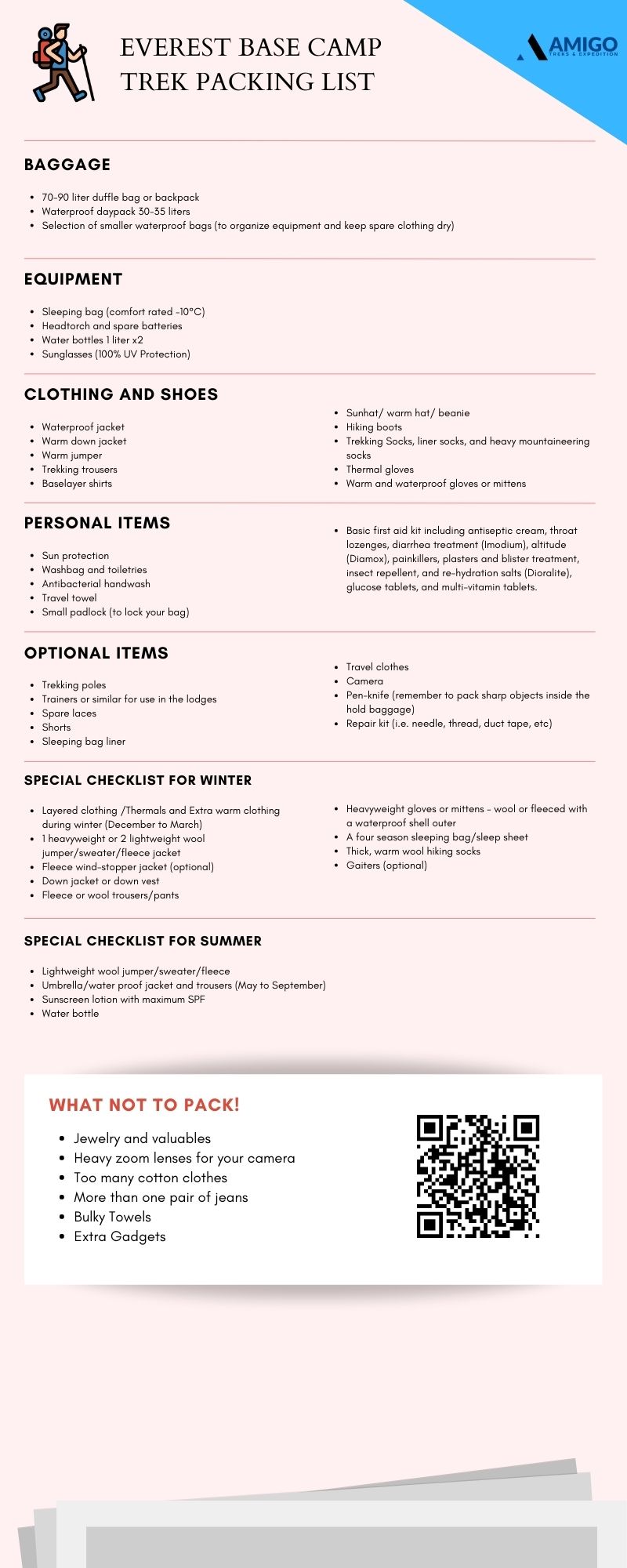
Everest Base Camp Trek Packing List
Baggage
- 70-90 liter duffle bag or backpack
- Waterproof daypack 30-35 liters
- Selection of smaller waterproof bags (to organize equipment and keep spare clothing dry)
Equipment
- Sleeping bag (comfort rated -10°C)
- Headtorch and spare batteries
- Water bottles 1 liter x2
- Sunglasses (100% UV Protection)
Clothing and Shoes
- Waterproof jacket
- Warm down jacket
- Warm jumper
- Trekking trousers
- Baselayer shirts
- Sunhat/ warm hat/ beanie
- Hiking boots
- Trekking Socks, liner socks, and heavy mountaineering socks
- Thermal gloves
- Warm and waterproof gloves or mittens
Personal Items
- Sun protection
- Washbag and toiletries
- Antibacterial handwash
- Travel towel
- Small padlock (to lock your bag)
- Basic first aid kit including antiseptic cream, throat lozenges, diarrhea treatment (Imodium), altitude (Diamox), painkillers, plasters and blister treatment, insect repellent, and re-hydration salts (Dioralite), glucose tablets, and multi-vitamin tablets.
Optional Items
- Trekking poles
- Trainers or similar for use in the lodges
- Spare laces
- Shorts
- Sleeping bag liner
- Travel clothes
- Camera
- Pen-knife (remember to pack sharp objects inside the hold baggage)
- Repair kit (i.e. needle, thread, duct tape, etc)
Special Checklist for winter
- Layered clothing /Thermals and Extra warm clothing during winter (December to March)
- 1 heavyweight or 2 lightweight wool jumpers/sweaters/fleece jacket
- Fleece wind-stopper jacket (optional)
- Down jacket or down vest
- Fleece or wool trousers/pants
- Heavyweight gloves or mittens – wool or fleece with a waterproof shell outer
- A four-season sleeping bag/sleep sheet
- Thick, warm wool hiking socks
- Gaiters (optional)
Special Checklist for Summer
- Lightweight wool jumper/sweater/fleece
- Umbrella/waterproof jacket and trousers (May to September)
- Sunscreen lotion with maximum SPF
- Water bottle
What NOT to pack!
Overpacking can make your Everest Base Camp trek more difficult and exhausting. To reach the base camp, you need to pack smart and light. Here are some items you should definitely leave behind:
- Jewelry and valuables
- Heavy zoom lenses for your camera
- Too many cotton clothes
- More than one pair of jeans
- Bulky towels
- Extra gadgets
By avoiding these items, you’ll ensure that your backpack remains manageable and that you can focus on the adventure ahead, rather than being weighed down by unnecessary gear.
Essential Accessories for Your Everest Base Camp Trek
Embarking on an Everest Base Camp trek is an adventure of a lifetime. To ensure you’re fully prepared, consider bringing the following accessories:
1. Backpack Rain Cover
A rain cover for your backpack is crucial for keeping your gear dry during heavy rainfall. This is particularly important if you have sensitive items like cameras or important documents that need protection.
2. Waterproof Bags
Using a large garbage bag or dry bags to line the inside of your backpack can provide additional waterproofing. This helps to protect your clothing and other essentials from getting wet.
3. Hydration Solutions
- Water Bottles
We suggest carrying two 32-ounce water bottles like Nalgene. These sturdy bottles are not only great for hydration but can also be filled with hot water at night to serve as makeshift hot water bottles. Avoid using metal bottles for this purpose. - Water Bladder
A hydration bladder (such as a 3-liter Camelbak) is highly recommended. This hands-free hydration system allows you to drink water on the go, ensuring you stay hydrated without frequent stops.
4. Organization Tools
Stuff sacks, dry bags, or resealable plastic bags can help you keep your gear organized and dry. These can be lifesavers in maintaining order and protecting your items from moisture.
5. Leisure Items
Bringing a book, a diary, or a deck of cards can be a great way to unwind in the lodges during your downtime. Keeping a journal of your trek can also make for wonderful memories later on.
By including these items in your packing list, you’ll be better equipped to handle the diverse conditions and challenges of the Everest Base Camp trek. Safe travels and enjoy your adventure!
Essential Travel Documents for the Everest Base Camp Trek
1. Trek Itinerary
Carry a hard copy of your trek itinerary, especially if you’re not using a smartphone. A detailed blueprint can help you stay on track.
2. Passport
Ensure your passport has a minimum validity of six months. This is a standard entry requirement for international travel.
3. Photocopies of Passport
Bring 2-3 photocopies of your passport. These can be useful for permits or in case your passport gets lost.
4. Passport-sized Photos
Have at least four passport-sized photos. These are often required for permits and other official documents.
5. Visa
You can obtain a visa upon arrival at Kathmandu Airport. Make sure to check the latest visa regulations before your trip.
6. Immunization Records
For your health protection, carry your immunization records. Consult with your physician or visit the CDC website for detailed recommendations about necessary vaccinations.
7. Insurance Documents
Carry documents for insurance that covers medical emergencies, flight cancellations, trip cancellations, and rescue operations including air ambulance. This is vital for your safety and financial protection.
8. Cash
It is advisable to carry cash, approximately $200 to $300, for unforeseen expenses. ATMs are scarce in the remote trekking areas.
By preparing these essential documents, you’ll be well-equipped for a smooth and secure journey to Everest Base Camp.
Now that you are familiar with what to include, and exclude while packing for your Everest Base Camp Trek, make sure to check what you should expect when traveling to Nepal.